
A VA loan can get you into a house with no down payment and a competitive rate, but the loan approval itself won’t tell you whether that house actually works for how you live. That’s a separate question, and it’s one a lot of buyers don’t ask until after the offer is already in.
Below, we’re breaking down what separates a property that merely qualifies for VA financing from a true VA-friendly home, what the VA appraisal actually checks (and what it quietly skips), which safety details deserve a second look, the accessibility features worth planning for now instead of later, the property types that come with hidden restrictions, and the layout and location factors that determine whether a house still feels right five or ten years in.
What the VA Appraisal Actually Covers
Every VA purchase requires an appraisal, and that appraisal does more than confirm a fair price; it also checks the home against the VA’s Minimum Property Requirements, or MPRs. These standards exist to confirm a property is safe, structurally sound, and sanitary before the government backs a loan on it. The appraiser is looking at things like functioning utilities, safe water and sewage systems, proper drainage, adequate space for living and cooking, and safe pedestrian and vehicle access to the property. A home that’s dated but functional will typically pass without issue; the VA doesn’t flag ugly paint colors or worn carpet, only conditions that genuinely affect safety or habitability.
Here’s the part that trips people up: the VA appraisal is not a home inspection, and it was never meant to be one. A VA-assigned appraiser confirms the home meets baseline conditions and checks surface-level items like obvious safety hazards, functioning utilities, and basic structural integrity, not the deeper condition of the roof, HVAC, plumbing, or electrical systems. That distinction matters more than most buyers realize, because a home can sail through its VA appraisal and still have a furnace on its last leg or a roof five years from needing replacement.
The appraisal produces a Notice of Value that’s valid for six months, and interestingly, that same notice often recommends a full inspection anyway: a quiet admission from the process itself that the appraisal only covers part of the picture.
That’s exactly why a private inspection is worth the cost even though the VA doesn’t require one. Home inspections typically run $300 to $500 and can save buyers thousands of dollars in future repairs, which is a small price compared to discovering a failed HVAC system three months after closing.
The demand for this kind of financing isn’t shrinking: VA loan volume jumped 45% in the first half of 2025 compared to the year before, so more buyers than ever are navigating exactly this appraisal-versus-inspection gap for the first time, often without realizing the two processes serve completely different purposes.
If you’re weighing whether to skip the inspection to save a few hundred dollars, don’t. A veteran-friendly real estate agent or an experienced set of eyes can usually flag issues you’d otherwise miss, pointing out property features or flaws buyers haven’t noticed themselves.
Safety Details That Deserve a Closer Look
Cosmetic wear doesn’t disqualify a home from VA financing, and it shouldn’t be an automatic dealbreaker for you either. But there’s a real difference between outdated countertops and an actual safety hazard, and it’s worth training your eye to tell the two apart before you’re emotionally attached to a house.
Falls are a bigger issue in American homes than most people assume, and not just for the very elderly. Falls send about 3 million older adults to the emergency room and cause roughly 1 million hospitalizations every year, and they remain the leading cause of injury for adults over 65. A large share of those incidents happen inside the home itself, often in bathrooms, on stairs, or around poorly lit entryways.
A national study of Medicare beneficiaries who had already fallen found something telling: roughly 40% of people with repeated falls still had no bathroom modifications at all, meaning the fix often doesn’t happen until well after it was actually needed.
For a veteran evaluating a property, whether they’re buying for themselves today or thinking ahead to aging in place, recovering from a service-connected injury, or eventually housing a parent, this translates into a short but real checklist worth running through on every showing:
- Grab bars, or at minimum wall blocking installed for future grab bars, in bathrooms
- Non-slip flooring in bathrooms and kitchens, not just cosmetic tile
- Handrails on both sides of any staircase, not just one
- Adequate lighting in hallways, stairwells, and entryways
- Working smoke and carbon monoxide detectors in every required location
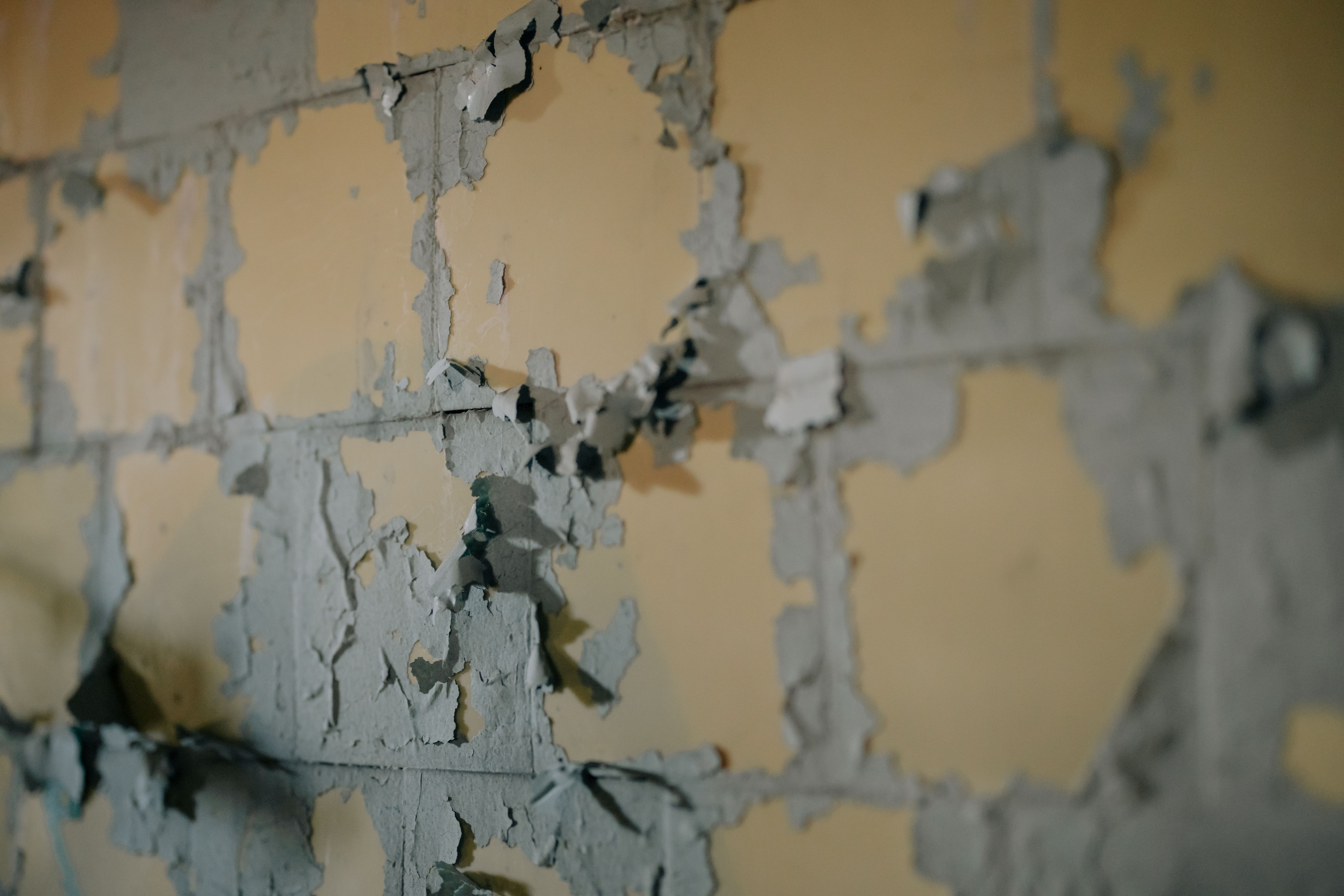
- No signs of peeling paint in homes built before 1978, which can signal lead paint issues
- A radon test, especially in homes with finished basements, since radon exposure is a leading cause of lung cancer in non-smokers and is invisible without testing
That pre-1978 point comes up more often than people expect. Roof condition, crawlspace access, and peeling paint on older homes are among the most common issues that delay VA closings. While fixable, all are far better caught before you’re under contract than after.
None of these are reasons to walk away from an otherwise solid house. They’re reasons to ask for repairs, negotiate on price, or simply go in with clear eyes about what you’re taking on.
Accessibility Isn’t Just a “Someday” Feature
It’s easy to assume accessibility only matters for veterans with a current disability. In practice, a home’s accessibility is one of the clearest signs of whether it was built with real longevity in mind. Zero-step entries, wider hallways and doorways, a bedroom and full bathroom on the main level, and lever-style door handles instead of knobs all cost very little to build in from the start but are expensive and disruptive to retrofit later.
This matters for a practical reason beyond comfort: many veterans qualify for federal money specifically earmarked for these upgrades, and it pays to know that before you rule out a home that’s “almost” accessible.
Through the VA, Specially Adapted Housing and Special Home Adaptation grants exist to help veterans with qualifying service-connected disabilities buy, build, or modify a home for full accessibility. The Specially Adapted Housing grant currently offers up to $126,526 for a veteran’s permanent home, while the Special Home Adaptation grant offers up to $25,350 for smaller modifications tied to upper-body disabilities, vision loss, or burns. Neither is a loan; there’s nothing to repay, and neither reduces your VA loan entitlement in any way, meaning the two benefits stack cleanly.
A veteran shopping for a VA-friendly home with a slightly outdated bathroom or a doorway that needs widening isn’t necessarily looking at a dealbreaker; they may be looking at a project a federal grant was already built to fund.
Even for buyers who don’t currently need these features, building or buying with future flexibility in mind is a smart hedge. A single-story floor plan, a walk-in shower instead of a step-over tub, a garage with a level entry, and a main-level laundry room all quietly future-proof a purchase without costing anything extra today.
Property Type Matters as Much as Condition
One thing that surprises a lot of first-time VA buyers: the type of property you’re considering carries its own set of rules, separate from its physical condition. Not every home style is treated equally by the VA, and finding out mid-contract can cost you weeks or the deal entirely.
Condominiums are a common example. The VA requires the entire condo project, not just the individual unit, to be approved before financing can close, and unlike FHA loans, the VA doesn’t offer a single-unit approval workaround. If a condo project isn’t already on the VA-approved list and can’t be approved before closing, VA financing simply isn’t available for that unit, no matter how move-in ready it looks.
Manufactured and modular homes are eligible, but the rules diverge sharply depending on which category a home falls into. Modular homes are built to the same state and local codes as traditional site-built homes and are treated almost identically for VA purposes.
Manufactured homes are a different story: they must be built to HUD Code, permanently affixed to an approved foundation, titled as real property rather than personal property, and the buyer typically has to own the land the home sits on.
Anything built before June 15, 1976 falls under the older “mobile home” classification and isn’t eligible for VA financing at all, regardless of condition or renovations made since. Manufactured homes also tend to face more scrutiny during the VA appraisal process than comparable site-built homes, so it’s worth asking a lender directly rather than assuming eligibility.
Layout and Livability for the Long Haul
Beyond safety, accessibility, and property type, the shape of a home determines how well it actually fits daily life, and military life has a few patterns worth designing around. Frequent moves, remote work between deployments or assignments, and a need for flexible space (a home office, a gym, a guest room for family visiting from out of state) all show up more in military households than in the general buyer pool.
The numbers back this up: active-duty buyers in particular are far more likely to be relocating for a job: 41% moved more than 500 miles to buy their new home. That’s a lot of buyers making major housing decisions from a distance, often without the benefit of walking a neighborhood repeatedly before committing. If that’s your situation, prioritize:
- A flexible extra room that can serve as an office, nursery, or workout space
- Real storage: garages, closets, and a mudroom or drop zone near the entry
- A kitchen laid out for actual daily cooking, not just square footage on paper
- Efficient windows and insulation, since utility costs matter more on a fixed housing allowance
- A yard or outdoor space that doesn’t demand constant upkeep if you expect to relocate again
- A garage or workshop area if hobbies, storage for gear, or a side project matter to your household
Layout choices that reduce long-term maintenance and utility costs aren’t just a comfort preference; they’re part of making the math work on a military income over time, especially for buyers eyeing move-in-ready VA homes or comparable listings where a full renovation budget simply isn’t realistic.

Location Still Matters, Even With a Great Loan
No amount of interior upgrades fixes a property in the wrong spot. The VA’s own property standards already require reasonable access to the home by street, but “technically accessible” and “genuinely convenient” are two different things, especially for a household managing a duty station, a spouse’s job, and school-age kids at the same time.
For buyers looking near Fort Hood specifically, proximity and commute time deserve as much weight as square footage. Killeen or Harker Heights homes near Fort Hood, and similar searches turn up plenty of inventory, but distance on a map and distance in actual drive time can be very different things.
The right property is the one that keeps your actual daily routine simple, not just the one that looks closest on a map.
Flood zones are also worth flagging early, since a property in a flood zone without accessible flood insurance can create real complications for VA financing. Airport clear zones carry similar restrictions. Neither is common, but both are the kind of thing that’s far better to catch before you fall in love with a listing than after your offer is already in.
This is also where a military relocation realtor who works this specific market regularly earns their keep, someone who already knows which neighborhoods tend to run into these issues and which ones consistently sail through VA appraisals without drama.
Questions Worth Asking Before You Offer
Before writing an offer, it helps to have a short, specific list of questions ready rather than relying on gut feeling alone:
- Is this property type actually VA-eligible, and has that been confirmed with the lender?
- Has the home had any bathroom, staircase, or entryway modifications, and if not, would adding them be simple or disruptive?
- Is the home in a flood zone or airport clear zone that could complicate VA financing?
- When were the roof, HVAC system, and water heater last replaced?
- Is there any visible peeling paint, and if the home predates 1978, has it been tested for lead?
- Would a single-level bedroom and bathroom work for this household now or in the foreseeable future?
- Does the commute to post actually match what a map suggests, accounting for peak traffic?
None of these questions are meant to talk anyone out of a good house. They’re meant to make sure the house that looks good on a listing photo still looks good after a walkthrough, an inspection, and a realistic look at the next several years.

At the end of the day, a house doesn’t earn the label VA-friendly home because it passed an appraisal; it earns that label because it actually works for the person living in it, year after year.
Founded and led by a U.S. Army veteran, The Myles Group at Keller Williams is a top-producing group serving military families, homeowners, and investors across Killeen, Harker Heights, Belton, Temple, Nolanville, and Copperas Cove.
As a military relocation realtor team, we bring VA loan expertise, PCS relocation timelines, and access to VA-approved builders directly into the buying process.
Whether you’re searching for homes for veterans or just trying to figure out if a listing near Post is actually worth the drive, working with a trusted realtor who already knows this market saves time, money, and a lot of second-guessing.
Contact us today and let us help you find a home that’s genuinely ready for you.